
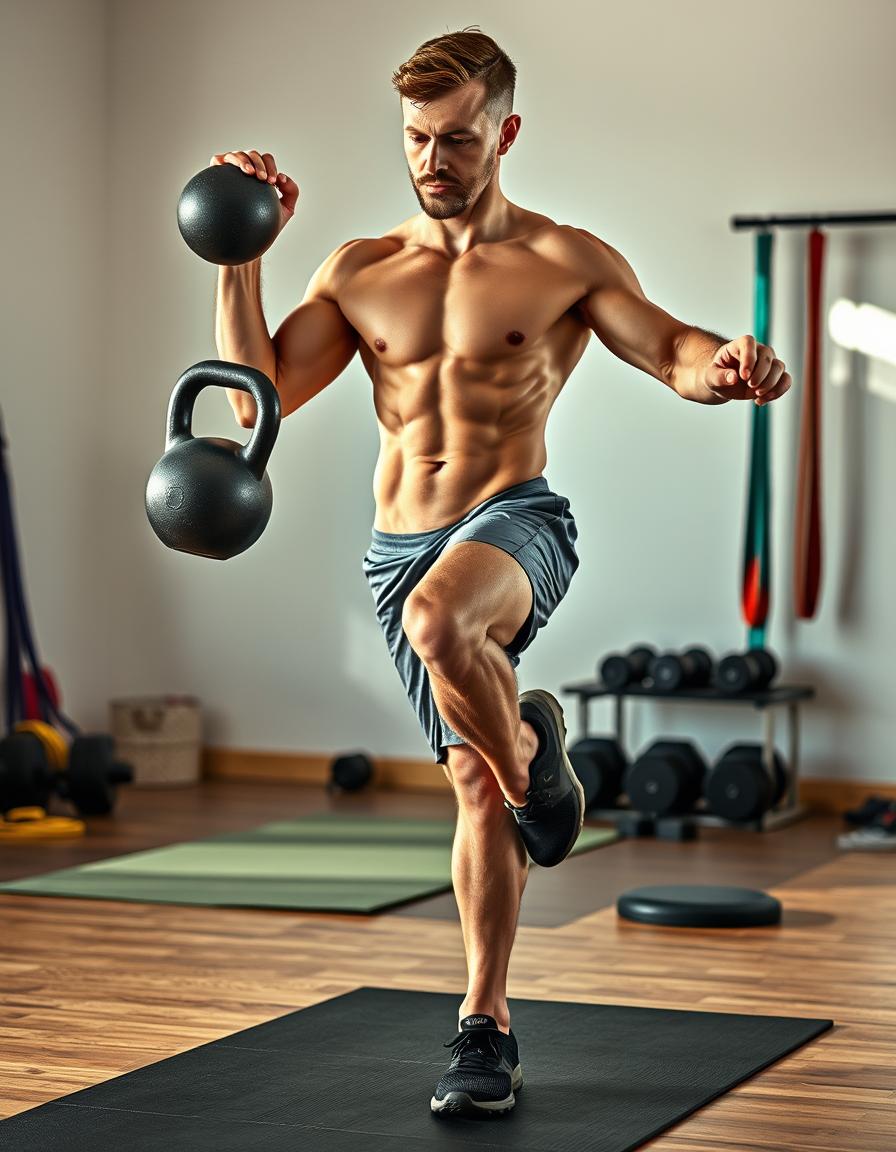

The kettlebell single leg deadlift is a fantastic exercise that blends balance, strength, and stability into one smooth move. It targets your hamstrings, glutes, core, and lower back, making it a powerful addition to any workout routine. Plus, it helps improve coordination and can even enhance athletic performance. Whether you’re new to kettlebells or looking to refine your form, mastering this exercise can bring unique benefits to your fitness journey.
What is the Kettlebell Single Leg Deadlift?
This move involves standing on one leg while holding a kettlebell, then hinging at the hips to lower the weight toward the floor while extending the free leg back. It’s a balance challenge that also strengthens the muscles along your posterior chain—the back side of your body. Compared to a traditional deadlift, this version requires more control and activates smaller stabilizer muscles.
Why Should You Try It?
- Improves balance: Standing on one leg challenges your stability, which transfers to better balance in everyday life.
- Builds strength: Targets hamstrings, glutes, and lower back muscles effectively.
- Increases flexibility: The hip hinge movement stretches your hamstrings gently.
- Supports injury prevention: Strengthening your posterior chain helps protect you from common lower body injuries.
Step-by-Step Guide to the Kettlebell Single Leg Deadlift
Getting this move right can feel tricky at first, but with patience, you’ll get better quickly. Here’s a simple way to ensure you’re doing it right.
| Step | Action | Tip |
|---|---|---|
| 1 | Stand tall on your right leg holding a kettlebell in front with one or both hands. | Keep your shoulders relaxed, chest open, and eyes looking forward. |
| 2 | Slowly hinge forward at the hips, letting your left leg extend straight back for balance. | Keep your back flat; avoid rounding your spine. |
| 3 | Lower the kettlebell close to the floor without touching it. | Feel the stretch in your hamstrings as you go down. |
| 4 | Pause briefly, then engage your glutes and hamstrings to return to standing. | Maintain balance by focusing on a fixed spot in front of you. |
| 5 | Repeat for desired reps, then switch legs. | Use a light kettlebell at first to build form and confidence. |
Common Mistakes to Avoid
- Rounding your back: This puts unnecessary strain on your spine. Always keep your back flat.
- Bending the knee on the standing leg: Try to keep that leg mostly straight, with a soft bend to protect your joints.
- Losing balance: If you find yourself wobbling, lower the weight and focus on slow, controlled movements.
- Not hinging at the hips: Remember, the movement comes from hinging your hips backward, not bending at the waist.
How to Incorporate the Kettlebell Single Leg Deadlift in Your Routine
You can add this exercise to your strength training days or use it as part of a warm-up to activate your posterior chain. It’s versatile and plays well with many workout styles.
- Start with 3 sets of 8-12 reps on each leg.
- Rest 30-60 seconds between sets depending on your fitness level.
- Combine with squats, lunges, and kettlebell swings for a complete lower-body workout.
Progressions and Variations
Once you feel comfortable, try these to keep challenging yourself:
- Use heavier kettlebells: Gradually increase weight to build strength.
- Add a pause: Hold at the bottom for 2-3 seconds to boost muscle engagement.
- Close your eyes: This amps up balance demands, but only when ready!
- Perform on an unstable surface: Like a balance pad, to further activate stabilizers.
Benefits Beyond Strength
Doing the kettlebell single leg deadlift regularly can benefit your body in surprising ways. It improves hip mobility, which is key for healthy movement and injury prevention. Your posture and core stability get a boost too. Plus, training one leg at a time can reduce imbalances that might cause pain or weakness down the line.
Interestingly, pairing strength exercises like this with cardio methods—such as those found in peloton weight loss programs—can maximize fat loss and muscle definition. It’s all about balance: strength, endurance, and recovery.
Equipment Needed
| Equipment | Purpose | Recommended Size/Weight |
|---|---|---|
| Kettlebell | Provides resistance for strength training | 8-16 kg (18-35 lbs) depending on experience |
| Flat, stable surface | Ensures safe balance during the exercise | Any firm floor or exercise mat |
| Optional: Balance pad | Increases challenge for balance and stability | Soft foam or special balance board |
Tips for Success
- Practice near a wall or sturdy object for support when starting out.
- Focus on moving slowly to control your balance throughout.
- Keep breathing steady—inhale as you lower, exhale as you rise.
- Record yourself to check your form or ask a trainer for feedback.
Conclusion
The kettlebell single leg deadlift is a smart move to help build strength, balance, and flexibility all at once. This exercise hits your muscles in a unique way and leaves you feeling more stable and confident on your feet. It’s an excellent way to work on muscular imbalances and prevent injuries. Remember to start light, focus on form, and gradually progress as you get stronger.
Whether you’re an athlete, a weekend warrior, or someone simply wanting to move better, adding this exercise to your routine can bring noticeable rewards. And if you want to combine strength with cardio for better overall fitness, exploring resources like peloton weight loss techniques can be really helpful. Keep at it, listen to your body, and enjoy the journey to better movement!

I’m Sandy – sharing simple tips, plans, and motivation to help you stay in a calorie deficit Plan and reach your fitness goals.
