
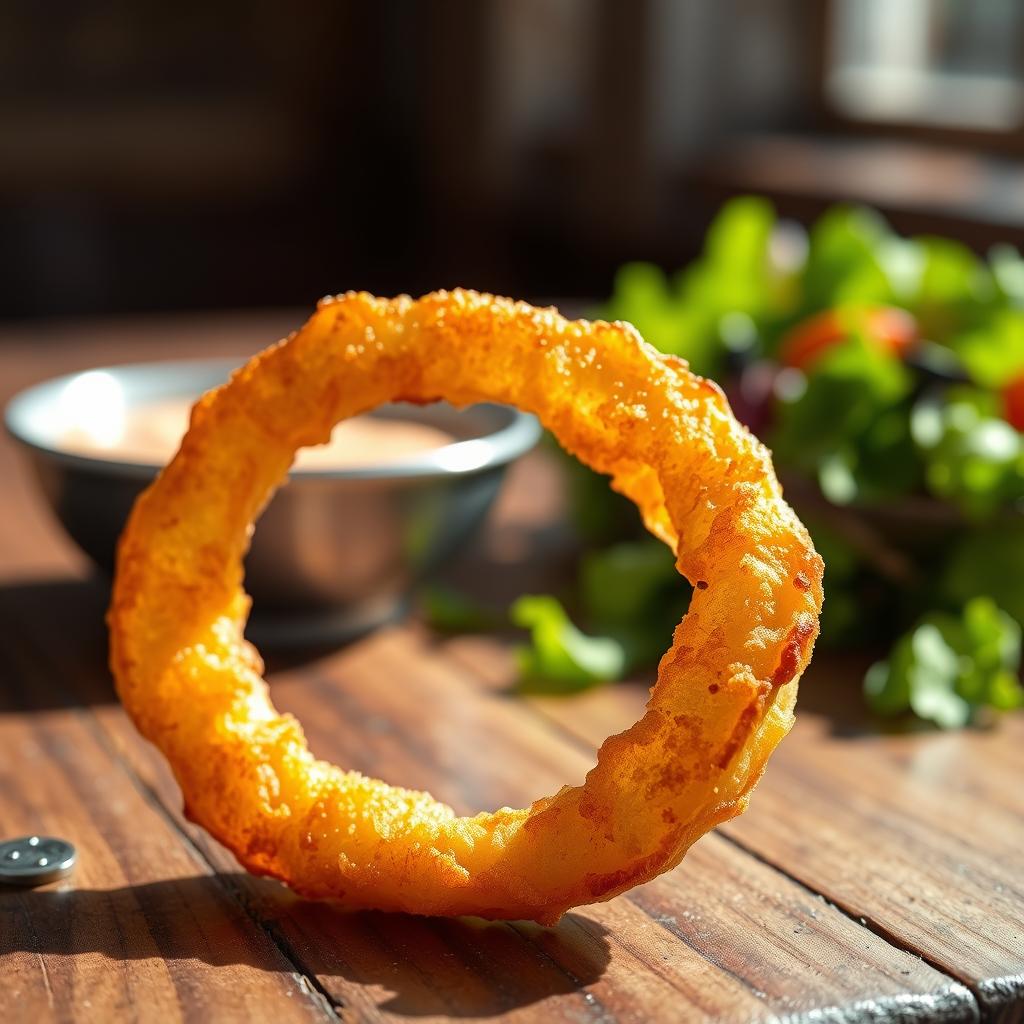
There’s something incredibly satisfying about a perfectly crispy, golden brown onion ring. That initial crunch followed by the sweet, soft onion inside is a culinary delight. But as you reach for another one, a common question might pop into your head: just how many calories are in these delicious circles? The answer isn’t as simple as you might think, as the total number of calories in onion rings can change dramatically based on where you get them and how they’re made. Understanding these factors can help you enjoy your favorite snack more mindfully.
What Exactly Determines the Calories in Onion Rings?
An onion by itself is a nutritional powerhouse, low in calories and packed with vitamins. A whole medium onion has only about 44 calories. However, an onion ring is much more than just an onion. The final calorie count is a result of a few key components that transform this humble vegetable into the crunchy treat we know and love. The primary drivers behind the high number of calories in onion rings are the batter, the cooking oil, and the overall portion size.
The Batter Coating
The batter is what gives an onion ring its signature crunch. Most batters are a simple mixture of flour, eggs, milk, and seasonings. While these ingredients aren’t calorie dense on their own, the thick layer of batter adds a significant amount of carbohydrates. A thicker, beer battered style ring will naturally have more calories than one with a light, tempura style coating. This coating acts like a sponge, which leads us to the next major factor.
The Cooking Method and Oil
The vast majority of onion rings are deep fried. When submerged in hot oil, the batter absorbs a substantial amount of fat, which dramatically increases the calorie count. Fat contains 9 calories per gram, compared to just 4 calories per gram for carbohydrates and protein. The type of oil used can affect the nutritional profile, but it won’t change the fact that deep frying adds a lot of calories. This cooking method is the single biggest reason for the high number of calories in onion rings.
A Look at the Numbers: Calories in Onion Rings by Serving Size
To get a baseline, we can look at data for a generic restaurant style onion ring. According to the USDA FoodData Central, a medium serving of fast food onion rings (around 100 grams, or about 8 9 rings) contains approximately 320 calories. This can be a helpful starting point, but remember that “medium” is subjective and can vary wildly between restaurants.
Let’s break that down further to understand what you’re consuming:
- Fat: A 100 gram serving can pack around 18 20 grams of fat, much of which is saturated fat from the frying oil.
- Carbohydrates: Expect to get about 35 40 grams of carbs, primarily from the flour in the batter.
- Sodium: Restaurant onion rings are often heavily salted. A medium portion can easily contain over 600 mg of sodium, which is a significant portion of the recommended daily limit.
- Protein: You’ll get a small amount of protein, usually around 3 4 grams per serving.
The calories in onion rings can add up quickly. A single, large onion ring from a restaurant can contain anywhere from 50 to 80 calories. Eating just a handful can be equivalent to consuming a small meal in terms of calories and fat.
Fast Food Onion Ring Calorie Showdown
Fast food chains are famous for their onion rings, but the nutritional information can vary quite a bit. Knowing the specific calories in onion rings from your favorite spot can help you make a more informed decision. We’ve gathered the latest information directly from the official sources for some of the most popular chains as of September 2025.
| Restaurant | Serving Size | Calories | Fat (g) | Sodium (mg) |
|---|---|---|---|---|
| Burger King | Value | 150 | 8 | 370 |
| Burger King | Small | 320 | 16 | 790 |
| Burger King | Medium | 410 | 21 | 1010 |
| Sonic Drive In | Medium | 480 | 23 | 690 |
| Sonic Drive In | Large | 660 | 32 | 950 |
| A&W Restaurants | Regular | 440 | 22 | 650 |
| Whataburger | Medium | 450 | 25 | 940 |
Note: Nutritional information is subject to change. Always check the restaurant’s official website for the most current data.
Burger King’s Onion Rings
Burger King offers several sizes, and even their “Value” size packs 150 calories. Upgrading to a medium size more than doubles that count to 410 calories. This shows how quickly the calories in onion rings can escalate with portion size, especially when paired with a full meal.
Sonic’s Hand Made Onion Rings
Sonic is known for their “Hand Made” onion rings, which often have a thicker, heartier batter. This is reflected in their calorie count, with a medium serving containing 480 calories and a large jumping to a whopping 660 calories. While delicious, these are one of the higher calorie options available.
Frozen vs. Homemade: The Calorie Battle in Your Kitchen
When you’re not eating out, you still have options for enjoying onion rings at home. The choice between grabbing a bag from the freezer aisle and making them from scratch can have a big impact on the final calorie count.
The Convenience of Frozen Onion Rings
Frozen onion rings are a popular and convenient choice. Most are designed to be baked in the oven or cooked in an air fryer. This cooking method eliminates the need for any additional oil, which significantly lowers the overall fat and calorie content compared to deep fried versions. For example, a standard serving (about 85 grams) of a brand like Ore Ida Gourmet Onion Rings contains around 200 calories when baked. Checking the packaging is key to knowing the exact calories in onion rings you buy.
Crafting Your Own: Homemade Onion Rings
Making onion rings from scratch gives you complete control over the ingredients. You can choose a lighter batter, use whole wheat flour, and control the amount of salt. However, if you choose to deep fry them at home, you can easily end up with a calorie count that rivals or even exceeds restaurant versions. The homemade approach only becomes a lower calorie option if you also change the cooking method.
Healthier Alternatives: Enjoying Onion Rings Without the Guilt
Craving that onion ring flavor but not the high calorie count? The good news is that modern kitchen appliances have made it easier than ever to create healthier versions of your favorite fried foods. By changing the cooking method, you can drastically reduce the calories in onion rings.
The Magic of the Air Fryer
The air fryer is a game changer for making crispy foods. It works by circulating superheated air, which “fries” the food with minimal oil. To make air fried onion rings, you simply batter your onions, give them a very light spray of oil, and let the machine work its magic. A serving of homemade air fried onion rings can have as few as 150 calories and under 5 grams of fat, cutting the calories by more than half compared to their deep fried counterparts.
Baking to Perfection
If you don’t have an air fryer, your oven can do a similar job. Baking onion rings on a wire rack allows air to circulate, making them crispy on all sides. As with air frying, you use far less oil than deep frying. The final baked product will have a similar nutritional profile to air fried rings, making it another excellent way to lower the total calories in onion rings and enjoy them more often.
Onion Rings vs. French Fries: Which Side is Heavier?
This is the classic debate when ordering a side. Are onion rings a better choice than french fries? The answer often depends on the portion size and preparation, but in a head to head comparison, onion rings are frequently the higher calorie option.
The main reason for this difference is the batter. French fries are just potatoes, oil, and salt. Onion rings have the added component of a flour based batter. This batter increases the surface area of the food, allowing it to soak up more oil during the frying process. A medium order of fries from most fast food places typically ranges from 320 to 380 calories, while a medium order of onion rings often starts at 400 calories and goes up from there. If calories are your main concern, fries are often the slightly better pick.
Frequently Asked Questions About Onion Ring Calories
Here are some quick answers to the most common questions people have about the calories in onion rings.
Why are onion rings so high in calories?
The high calorie count comes from a combination of the carbohydrate rich batter and the large amount of fat absorbed during the deep frying process. The onion itself contributes very few calories to the final product.
How many calories are in just one onion ring?
This depends entirely on the size and thickness of the ring and its batter. A small, thin ring might have 40 50 calories, while a large, thickly battered ring from a restaurant like Sonic could have as many as 80 90 calories.
Can I eat onion rings and still lose weight?
Absolutely. No single food will make or break a diet. The key is moderation and portion control. If you love deep fried onion rings, consider having a small serving as an occasional treat. For more regular consumption, opt for healthier baked or air fried versions to reduce the overall calories in onion rings you eat.
Are there any health benefits to eating onion rings?
While onion rings are generally considered an indulgence, the onions inside do offer some benefits. Onions contain antioxidants like quercetin, which can help fight inflammation. However, the health drawbacks of the high fat, sodium, and calorie content from frying typically outweigh these minor benefits.
Conclusion
The number of calories in onion rings is not a fixed figure, it’s a wide spectrum influenced by batter, cooking method, and serving size. A large, deep fried portion from a restaurant can easily contain over 600 calories, while a modest serving of baked or air fried rings made at home can be a much lighter option, sometimes with fewer than 200 calories. Understanding what contributes to the onion ring calorie count empowers you to make choices that fit your lifestyle. Whether you enjoy them as a rare indulgence or make a healthier version at home, you can still find a place for this crispy, classic favorite.

