
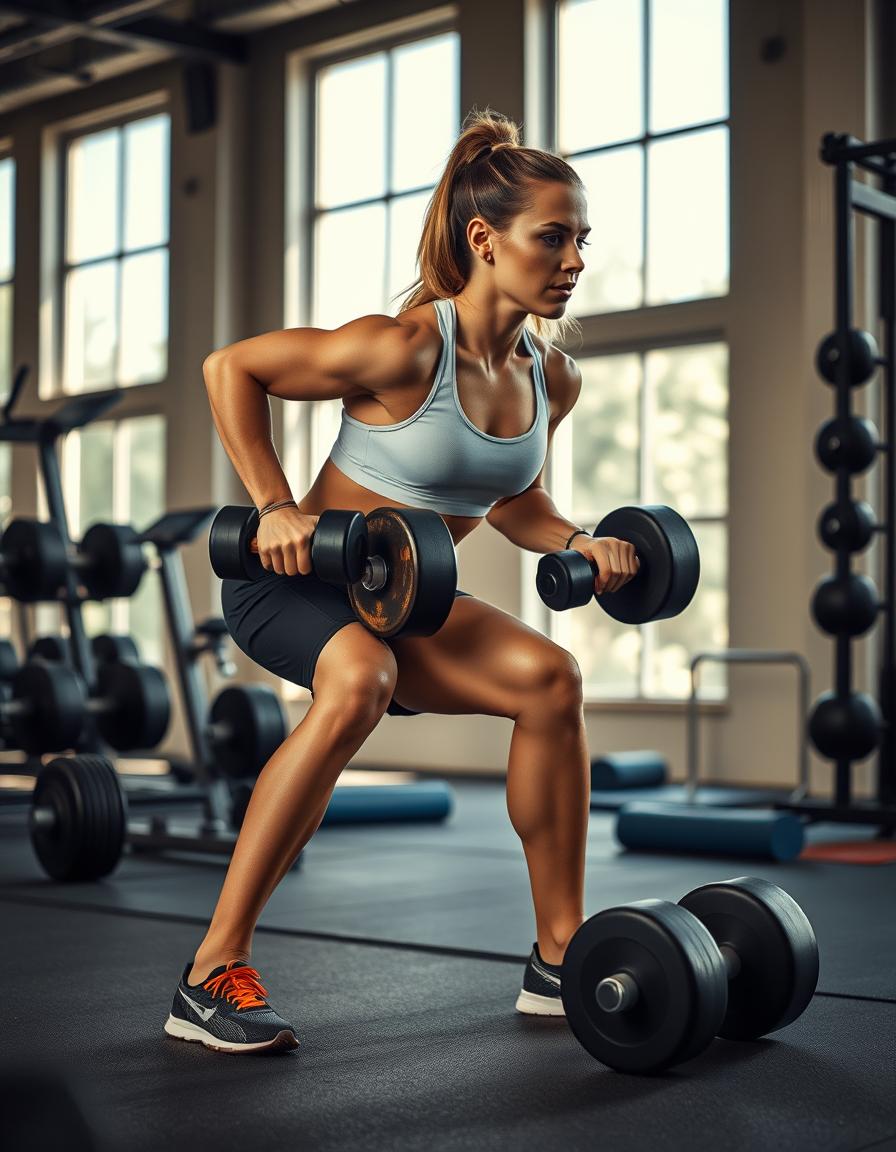

Building strong legs is a goal many fitness enthusiasts share, especially when it comes to increasing leg power and boosting overall athletic performance. Using dumbbells for quad workouts offers a simple yet effective way to develop strength, muscle tone, and endurance in your legs. Dumbbells add resistance that challenges your muscles in ways bodyweight exercises sometimes can’t, helping you progress steadily. Whether you’re a beginner or have been training for a while, incorporating quad workouts with dumbbells into your routine can elevate your leg power significantly.
Why Focus on Quad Workouts with Dumbbells?
The quadriceps, or “quads,” are the large muscles located at the front of your thighs. They play a crucial role in walking, running, jumping, and squatting. Strengthening your quads helps improve your stability and power, which is essential not just for athletes but for everyday movements too. Dumbbells offer a unique advantage because they allow for more dynamic and varied exercises than machines or barbells, providing a functional strength-building experience.
Using dumbbells lets you work each leg independently if needed, which helps fix muscle imbalances and ensures balanced strength development. Plus, dumbbells are versatile, affordable, and easy to store — making them a smart choice for home workouts.
Top Quad Workouts with Dumbbells for Leg Power
Here are some effective exercises that target your quads and help build leg power. Remember to always warm up before starting and use weights that challenge you without compromising your form.
1. Dumbbell Goblet Squat
This exercise targets the quads, glutes, and core. Holding a dumbbell close to your chest helps you maintain an upright posture and puts more focus on the front of your legs.
- Hold a dumbbell vertically at your chest with both hands.
- Stand with feet shoulder-width apart.
- Lower down into a squat, pushing your hips back but keeping your chest up.
- Go as low as comfortable, then drive back up through your heels.
2. Dumbbell Bulgarian Split Squat
This single-leg squat variation is excellent for building quad strength and balance. It also challenges your coordination.
- Hold a dumbbell in each hand by your sides.
- Place one foot behind you on a bench or step.
- Lower your hips until your front thigh is nearly parallel to the floor.
- Push back up using your front leg.
- Switch legs after your reps.
3. Dumbbell Step-Ups
A dynamic move that improves quad power and mimics daily activities like climbing stairs.
- Hold dumbbells at your sides.
- Step onto a sturdy bench or platform with one foot.
- Push through the front heel to lift your body up.
- Step down and repeat with the other leg.
4. Dumbbell Front Lunges
Front lunges are great for isolating the quads and improving balance and coordination.
- Hold dumbbells by your sides.
- Step one leg forward and lower your hips until both knees are bent at about 90 degrees.
- Keep your torso upright and push back to start.
- Alternate legs.
5. Dumbbell Sumo Squat
A wider stance targets the inner quads and adductors more while still activating the major quad muscles.
- Hold a dumbbell with both hands between your legs.
- Position your feet wider than shoulder-width, toes slightly turned out.
- Lower into a squat, keeping your back straight.
- Squeeze your quads as you return to standing.
Sample Quad Workout Routine
| Exercise | Sets | Reps | Rest |
|---|---|---|---|
| Dumbbell Goblet Squat | 3 | 12-15 | 60 seconds |
| Dumbbell Bulgarian Split Squat | 3 | 10-12 each leg | 60 seconds |
| Dumbbell Step-Ups | 3 | 12 each leg | 45 seconds |
| Dumbbell Front Lunges | 3 | 10 each leg | 45 seconds |
| Dumbbell Sumo Squat | 3 | 15 | 60 seconds |
Tips to Maximize Your Quad Workouts with Dumbbells
- Focus on form: Using dumbbells adds resistance, but poor technique can lead to injury. Move slowly and control each rep.
- Breathe properly: Exhale when exerting force (like pushing up) and inhale on the way down.
- Progress gradually: Start with lighter dumbbells to master the movements, then increase weight as you get stronger.
- Consistency is key: Regular workouts, at least 2-3 times per week, will help you see results faster.
- Stretch and recover: After working your quads, stretch gently and give your muscles time to repair.
It’s interesting how a simple change like adding dumbbells can transform your leg workouts. Plus, pairing exercise with proper nutrition keeps your muscles fueled. For instance, learning about yukon gold potato nutrition can help you incorporate healthy carbs that boost energy without excess calories.
Common Mistakes to Avoid
- Rushing reps: Don’t speed through exercises; this reduces the workout’s effectiveness and increases injury risk.
- Too heavy too soon: Picking dumbbells that are too heavy can mess up your form and strain joints.
- Neglecting both legs equally: Don’t favor one leg; keep the workout balanced to avoid imbalances.
- Ignoring warm-ups: Skipping warm-ups can lead to stiff muscles and injury.
How Quad Strength Improves Your Everyday Life
Strong quads help with much more than just looking good in shorts. They support your knees and hips, making it easier to climb stairs, carry groceries, or play with your kids. Strong legs can also prevent falls by improving balance and stability. If you’ve ever felt winded just getting up from a chair, building leg power will change that quickly. It’s like giving your legs a tune-up that keeps everything running smoothly.
Conclusion
Incorporating quad workouts with dumbbells into your fitness routine is a simple yet powerful way to develop leg strength and power. These exercises target your quads effectively while improving balance and coordination, enhancing your overall mobility. Dumbbells bring a unique challenge that engages your muscles in ways that bodyweight exercises often can’t. Remember to prioritize good form, progress wisely, and pair your workouts with sound nutrition. Strong legs lay the foundation for health, confidence, and an active lifestyle—for years to come.

I’m Sandy – sharing simple tips, plans, and motivation to help you stay in a calorie deficit Plan and reach your fitness goals.
